
Solar Hot Water System Sunshine Coast: Roof Panels, Tanks and Boosters
A sunny roof can do much of the work of heating your water. A solar hot water system uses it, with a booster for the cloudy spells.
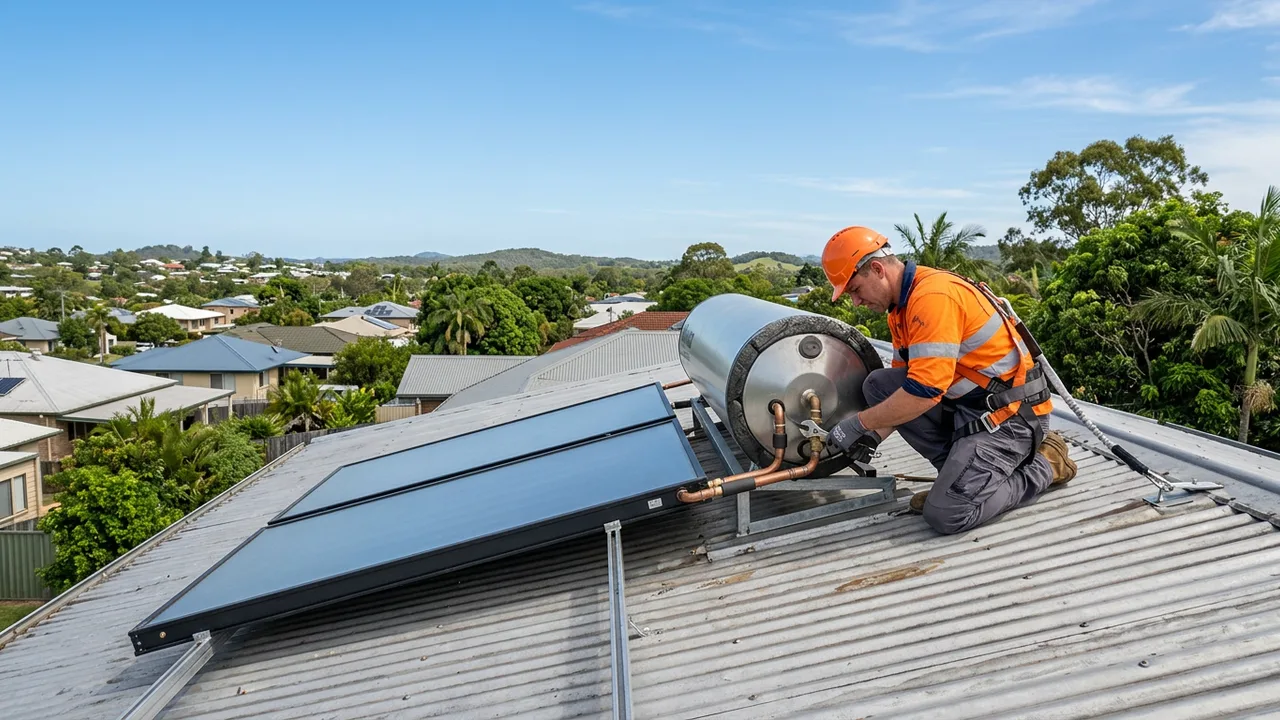
Solar hot water on the Sunshine Coast uses roof collectors to heat water directly from the sun, so most of the energy costs nothing once the system is paid for. A booster, either an electric element or a gas burner, tops up the temperature on cloudy days and through winter. The system suits homes with a clear, north-facing roof area and a household that uses a good amount of hot water.
What is included
- Roof suitability The collectors need roof area facing roughly north, clear of shade from trees or neighbouring buildings.
- Close-coupled or split system A close-coupled system puts the tank on the roof with the collectors. A split system keeps the tank at ground level.
- Booster choice An electric or gas booster covers the days the sun cannot, and its setup decides much of the running cost.
- Endorsed installation Only a plumber holding the QBCC endorsement for solar and heat pump systems can install one in Queensland.
How it works
-
Roof and household check
The roof orientation, shade and structure are looked at alongside how many people use hot water.
-
Pick the system and booster
Close-coupled or split, then an electric or gas booster that suits the home.
-
Quote with STCs
The quote lists the collectors, tank, booster and the STC discount taken off the price.
-
Install and commission
Collectors go on the roof, the tank is plumbed in, the booster is set and the Form 4 is registered.
How solar hot water works on a Sunshine Coast roof
Water or a heat transfer fluid runs through the roof collectors, picks up heat from the sun and returns it to the tank. On a clear day that can bring the tank to temperature without any help. When it cannot, the booster switches on to reach the required storage temperature, which Queensland puts at a minimum of 60°C so Legionella cannot take hold.
The local climate is a good fit for solar, with long sunny stretches through much of the year. The main limits are roof space, shade and how the house faces, rather than the weather.
Solar hot water or a heat pump on the Sunshine Coast
Both systems cut the cost of heating water compared with a plain electric tank, and both earn the STC discount. Solar takes its heat straight from the sun, so it works best on an unshaded roof with good orientation. A heat pump takes heat from the air through a fan unit on the ground, so it does not need roof space but makes some noise and draws a little electricity, which rooftop solar panels can supply.
If your roof already carries solar panels, a heat pump on a daytime timer often makes better use of that space. If the roof is free and well placed, solar hot water uses it directly. For the details of that alternative, see the heat pump service page.
What solar hot water costs
On Brisbane price figures revised in November 2026, an installed solar hot water system runs from $3,500 to $7,000, with $5,000 typical. Roof access, the choice of close-coupled or split, the booster type and removal of the old system all move the final price.
The STC discount helps. Models listed with the Clean Energy Regulator earn small-scale technology certificates, which installers normally turn into money off the quote. The number created falls each year, so the discount is gradually reducing.
Endorsement, booster settings and coastal roofs
Fitting solar hot water in Queensland is restricted to plumbers carrying the QBCC solar and heat pump endorsement, so ask for that detail with the quote. Once installed, the booster settings matter. A booster that runs on a timer or controlled load after the sun has had its chance uses far less power than one left on all day.
On beachfront roofs, salt reaches the collector frames and fittings. Stainless or coated frames and an occasional fresh water rinse help, and a split system keeps the tank itself out of the weather.
Solar hot water options
- Close-coupled roof systems Collectors and tank together on the roof, a compact option where the roof can carry the weight.
- Split solar systems Collectors on the roof and the tank on the ground, with a pump moving water between them.
- Booster and controller checks Setting the booster and timer so it tops up only when the sun has not done the job.
Solar hot water across the Sunshine Coast
Frequently Asked Questions
Is solar hot water a good fit for the Sunshine Coast climate?
How long does a solar hot water system last?
Should I choose solar hot water or a heat pump?
Get it priced
Tell us your current system, what it is doing and your suburb, and get your hot water sorted.